Learn more about clinic escorting and the volunteers who help patients safely access reproductive healthcare with dignity, compassion, and support.
Who are clinic escorts?
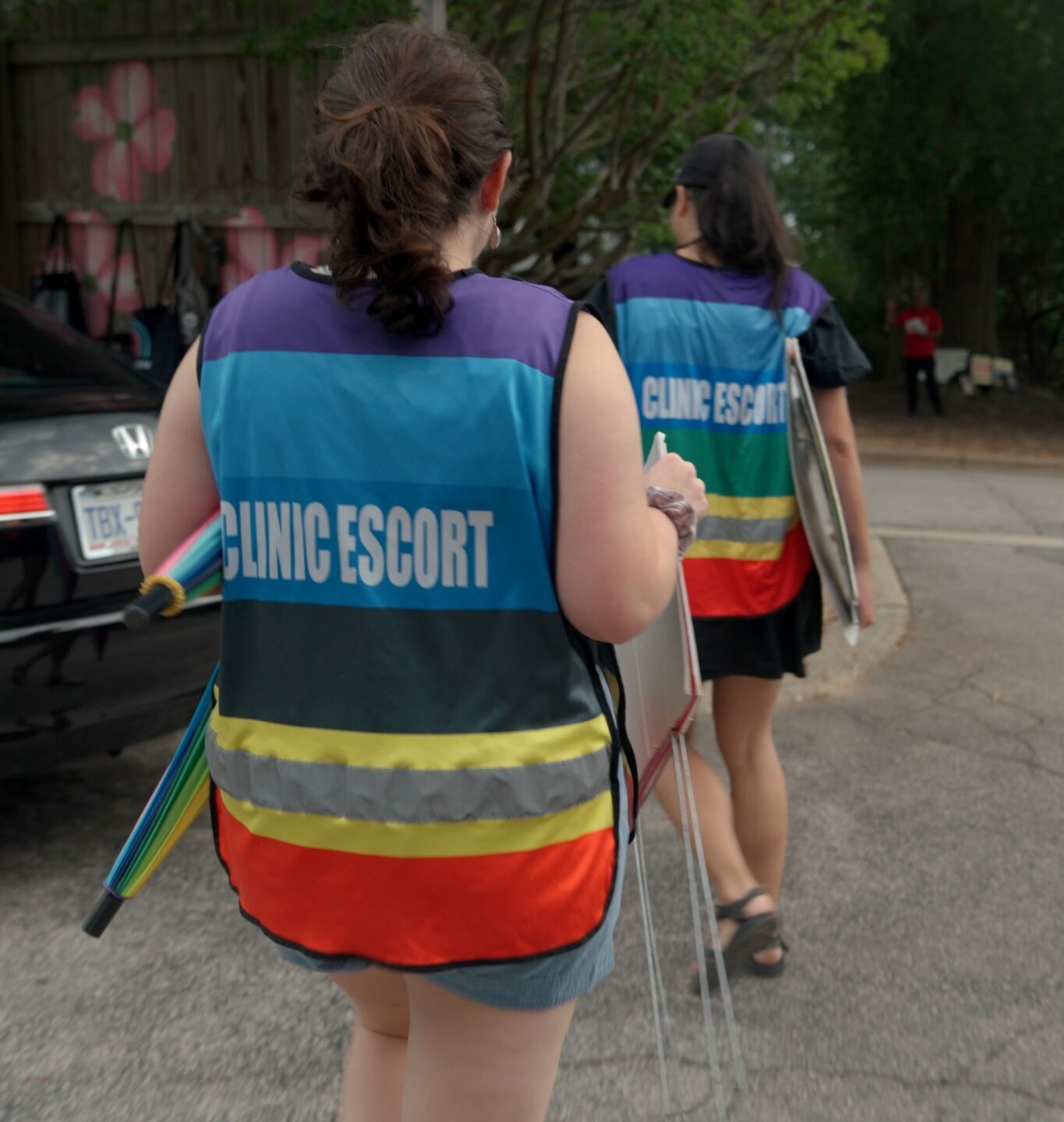
Learn about the volunteers in the colorful vests.
Trained unpaid volunteers who walk with patients — and sometimes their companions — from the sidewalk into reproductive healthcare clinics.
Offer calm, steady physical and emotional support during moments that can feel uncertain or tense.
Serve at independent clinics, Planned Parenthood health centers, and other reproductive healthcare facilities.
They can be found in rural and urban communities across the United States, supporting patients in both red and blue states.
Typically identified by brightly colored vests labeled “Clinic Escort” or “Patient Escort,” helping patients know who is there to support them.
Why are clinic escorts needed?
Outside many clinics, patients pass through crowds of protesters, usually gathered near the entrance.
Many clinic escorts refer to anti-abortion protesters simply as "antis."
These groups often use graphic signs, loudspeakers, chanting, and direct confrontation in an effort to delay, discourage, or intimidate patients seeking care.
Clinic escorts help create a buffer of safety between patients and these protesters.
They focus on helping patients move calmly and safely from arrival to clinic door.
Rather than responding to protesters, they stay focused on the patient’s path forward.
Most escorts are trained in non-engagement and de-escalation techniques.
A Brief History of Clinic Escorting
Clinic escorting began emerging in the late 1970s, as abortion access became increasingly contested in the United States.
In some early cases, local activists began accompanying patients after protesters attempted to directly interfere with clinic access.
By the 1980s and 1990s, organized clinic blockades and large protest actions became more common.
Escort networks grew in response to increasing harassment at clinic entrances.
1990s also saw escalating violence against abortion providers, clinic staff, and volunteers.
In 1994, clinic escort James Barrett and physician Dr. John Britton were killed outside a clinic in Pensacola, Florida.
These and other acts of violence helped lead to the passage of the Freedom of Access to Clinic Entrances (FACE) Act, a federal law intended to protect patients, providers, and clinic access.
In 2022, the Supreme Court’s decision in Dobbs v. Jackson Women’s Health Organization overturned Roe v. Wade, ending federal protections for abortion rights.
Since the overturning of Roe, clinics and escorts have faced increased protest activity, harassment, threats, stalking, and acts of violence.
In 2025, President Trump pardoned anti-abortion activists convicted of violating the FACE Act, and his administration moved to limit federal enforcement of the law.